Lauren Kate’s Rapture

Review of Lauren Kate’s Rapture – by Evie Kendal
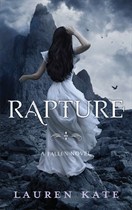
 Rapture cover

As a huge fan of Lauren Kate’s Fallen series I must confess I approached the final instalment, Rapture, with much trepidation. After all, what if Kate pulled a Twilight Book Four – promising an epic battle then just letting the drama fizzle out to nothing? Or even worse a Harry Potter Book Seven with its twenty unnecessary chapters and dire need of editing? More concerning still was the fact I’d recently read Kate’s debut novel The Betrayal of Natalie Hargrove (2009), which I can only describe as the weirdest young adult novel ever published. However, if there’s one thing readers can expect from the Fallen series it’s that each instalment will have a distinct purpose and solid structure – and Rapture is no different. There’s no meandering filler, no self-indulgent reminiscing over earlier plot developments, and when drama is promised it is delivered.

As a brief introduction to the series thus far, in the first book, Fallen, the focus was on protagonist Lucinda Price discovering fallen angel Daniel Grigori’s secret and that her own soul had been reincarnated over and over throughout history, always bound to his. The second novel, Torment, saw Luce attending a school for Nephilim and learning more about the supernatural realm, then in Passion the reader follows Luce’s journey through her past lives, trying to determine how to break the curse that keeps killing her every time she and Daniel get together. Providing a very brief recap of earlier events, Rapture builds on the previous revelations within the series and creates a new mission for Luce and Daniel to embark on. At the end of Passion, Lucifer went back in time to the Fall to erase all of history after that event, and now in Rapture Luce, Daniel and their allies have only nine days to find the exact location on Earth that the angels first fell millennia ago in order to preserve the past. Seeking out holy relics from across the globe to help them, the fallen angels make new alliances and must fight off the Scale, warrior-like angels charged with maintaining the balance between good and evil.

The most interesting development in Rapture concerns who and what Luce is. There have been hints throughout the series that she has a significant role to play in the final battle between the angels, demons and supernaturals-in-between, however these have been quite vague and sometimes implied her importance is only a result of her association with Daniel. Rapture actually begins exploring the super-human abilities Luce unknowingly possesses, granting her more agency and removing what little of the “damsel-in-distress” was found in her characterisation toward the beginning of the series. She discovers she can recall her past lives at will, access hidden dimensions, and even overcome most human frailties (such as that pesky need for oxygen that plagues so many of us). What becomes a little frustrating is the way Daniel and the others shelter her for as long as possible regarding the truth of her existence, however they do provide decent reasons for this.

After reading the resolution of the major story arc my first instinct was to say that it wasn’t my ideal ending, but that it was certainly far better than some of the alternative endings I had imagined possible. On further reflection, however, I realised the ending was vitally important for the overall message of the series. With many young adult series giving young girls a rather dangerous view of romance, it was refreshing to see in Rapture a clear message that if a boy acts jealously possessive and treats you as a means toward his own ambitions that he doesn’t truly love you. Contrariwise, if a boy strives to redress any power imbalance in your relationship to ensure an equal partnership and respect your autonomy, this is the foundation of a positive relationship. Real love is depicted in the series as being the sort of sacrificial love that puts the interests of the other first and accepts them exactly as they are. Given the necessity of the ending to facilitate this message I can forgive the fact it contained some minor disappointments.

As with all the earlier instalments, the cover art of Rapture is gorgeous and the text font and size makes for very easy reading. The language is accessible to a general audience and the mythology and narrative style engaging. Thoroughly recommended.

Snow White and the Huntsman: a review by Evie Kendal

Snow White and the Huntsman: A Novel by Lily Blake

A review by Evie Kendal. 

snow white and the huntsman cover

 When I went to see the film Snow White and the Huntsman (2012) recently I was already aware of the rumours of a planned sequel. I was immediately puzzled as to how one might go about scripting a sequel to one of the most famous plots of all time. After all, the Snow White narrative (and its many derivatives) has existed in written form since at least 1634, with Giambattista Basile’s “The Young Slave” being one of the earliest literary versions recorded. According to Maria Tatar in her book The Classic Fairytales (1999), while the Disney version with the poisoned apple and seven dwarves is probably one of the best known; traditionally Snow White was as likely to fall into her coma as a result of “a toxic comb, a contaminated cake, or a suffocating braid,” as ingesting any enchanted fruit. However, what is consistent across the different versions of the narrative is the central figure of the jealous stepmother, and the new film capitalises on this element with Charlize Theron delivering an excellent performance in this role. The poisoned apple and seven dwarves also figure in this retelling, and the huntsman (who is present in many classic versions of the tale) is obviously an important character as well. As all these staples have already been provided in the first film, the question remains as to what could possibly be left to tell in a sequel? Having now seen the film I can answer this! What is left for a sequel is what should have been provided as the ending to this film. The conclusion is completely unsatisfying and the romantic storylines left unresolved, and I am left to assume this was a deliberate move aimed at generating future income from the franchise. Sadly, this also appears to be the motivation behind Lily Blake’s novelisation of the film.

Snow White and the Huntsman: A Novel follows the film narrative very closely, however there are some minor differences (either as a result of being based on an early script draft or at the discretion of the author). In my opinion in almost all cases these changes detract from the story. First of all Blake’s version fails the “show don’t tell” mandate of quality creative writing. While the film slowly reveals the evil Queen Ravenna’s backstory and her family history, Blake tells the reader all the details upfront in the introductory section.  The seven dwarves are a late development in the film, however in the novelisation their existence and noble past are “spoiled” near the beginning. Another major reveal in the film is Snow White’s true identity, which she does not tell the huntsman until their lives depend on it. Again, Blake’s Snow White character blurts this out as soon as she meets Eric, giving him a reason to protect her beyond the desire for financial compensation. Blake also completely deletes the section of the narrative pertaining to Snow White’s real mother and the vast majority of that concerning her childhood friend, William (the Duke’s son), losing some interesting storyline as a result.

There are also some holes in the narrative that, while also present in the film version, are somehow more glaring in the written form. One such is Ravenna’s use of healing power on her brother Finn while he is in the woods searching for Snow White, which occurs after she has already stated she has no powers in the dark forest. Another issue arises when Eric reflects upon the fact Snow White was probably severely malnourished during the ten years she spent imprisoned in the tower, which highlights how unlikely it was that she would be in any condition to escape the castle in the manner she did, not to mention engage in all the physical fighting she does afterward. Nevertheless there is one difference in Blake’s novelisation that adds something meaningful to the plot – the addition of a long seduction between Ravenna and the King. This goes some way toward explaining why he would marry her, which occurs after a much longer period of acquaintance in the book compared to the film. While in the film his decision seems rash at best, and criminally negligent at worst, the book version absolves him of such accusations by showing exactly how he was duped into believing Ravenna truly loved him and his daughter. It is surprising, therefore, that Blake’s version also adds a fight between Snow White and the huntsman that centres on King Magnus’ blameworthiness in bringing about the evil Queen’s reign, which is entirely absent in the film, where his guilt is more apparent.

There are also various changes in characterisation seen in Blake’s retelling, most notably with Snow White becoming a spoilt, whiny brat! While Kristen Stewart’s performance certainly lacked personality (in classic Bella Swan-style), Blake’s version is actually downright annoying. She calls the huntsman a “brute” and exposes a rather classist attitude towards him and several other peasant citizens she encounters, which is incongruous with her own position as an outcast and a fugitive. She also has no intention of fighting for her kingdom in Blake’s version, and is headed to the Duke’s castle not to rally his army, but to find a place to hide. She reflects that women have never been “allowed to fight,” and seems rather disinclined to challenge this state of affairs, losing what little empowerment the film version had. One positive change that Blake makes is Snow White’s obliviousness to her own beauty, an important element in many of the classic fairytales that is a little lacking in the film. There are also some benefits to the internal monologue that literary retellings allow, with the reader gaining a little more insight into the character than they would otherwise get. Ravenna’s character is even more violent than in the film, ordering that women and children be slaughtered in the streets. However, she cries out on behalf of Snow White before she is executed, claiming she feels a bond to her and does not want her killed. This event does not occur in the film, and in my opinion is rather unnecessary in the book. The huntsman is also quite a different character in Blake’s story, betraying his kingdom and the Duke’s soldiers in order to fund his drinking habit. While Blake tries to make him more sarcastic and amusing than the film incarnation, his general attitude makes him somewhat less appealing (and the absence of Chris Hemsworth to look at makes him a lot less appealing!).

The best part of Blake’s book is the beautiful layout and cover. Much like the film’s extraordinarily beautiful cinematography, this book looks absolutely gorgeous. There are 23 teeny chapters that are separated very artistically, with many also containing poem fragments in a lovely typeface. The font size and spacing make the book very easy to read – a recreational activity recommended for anyone not intending to watch the film version.